AI Crypto Trading 2025: The Complete Guide to Bots & Strategies on WEEX

Key Takeaways
- Not a magic bullet, but powerful: AI bots do not guarantee profits, but can increase performance by 30–50% through 24/7 operation and discipline.
- Emotionless trading: Algorithms eliminate psychological errors like panic selling (Fear) or Greed and execute strategies strictly.
- Strategy must fit the market: Use grid bots for sideways phases and DCA bots for long-term wealth accumulation – there is no one-size-fits-all.
- Backtesting is mandatory: Test every bot configuration with historical data before risking real capital.
- Cost efficiency: Integrated tools on platforms like WEEX often save expensive subscription fees from external providers and reduce latency.
Introduction
AI Crypto Trading automates your trading strategies and eliminates emotional errors – 24 hours a day. But which bots deliver real returns and how do you avoid expensive beginner mistakes?
The question today is no longer if AI is changing the market, but how you can benefit from it. Institutional traders have long been using these advantages. In this guide, you will learn how AI trading bots work technically, which strategies (such as grid or DCA) are suitable for the current 2026 market phase, and how to securely configure your first setup on WEEX. Start now with data-driven trading instead of gut feeling.

What is AI crypto trading and how does it work?
AI (Artificial Intelligence) trading uses software algorithms that analyze market data and make buy or sell decisions autonomously. Unlike simple scripts, modern machine learning models learn from historical data.
- Systematic execution: The bot trades strictly according to your predefined logic – faster than any human.
- Pattern recognition: Algorithms identify trends and anomalies in charts that are invisible to the naked eye.
The 3 biggest advantages of trading bots
Why should you hand over control to an algorithm? Here are the three main reasons why professionals rely on automation:
Emotionless execution
AI bots know no fear or greed. Impulsive errors during sudden market crashes are avoided. The bot sticks to the plan with discipline – no matter how volatile the market is.
Pattern recognition on a large scale
Bots can scan hundreds of markets simultaneously (e.g., BTC/USDT, ETH/USDT, and altcoins). They process thousands of data points in seconds and find entry opportunities while you sleep or work.
Lightning-fast reaction & arbitrage
When breaking news hits, bots react in milliseconds. They exploit arbitrage opportunities (price differences between markets) before a manual trader has even opened the order book. This is particularly effective in combination with the low latency of the WEEX trading platform.
Proven AI strategies for 2025: Grid, DCA & Arbitrage
Not every bot fits every market. Choose your strategy based on the current trend:
Grid Trading (Ideal for sideways markets)
Grid bots place a network of buy and sell orders within a defined price range.
- How it works: Buying on price drops, selling on price increases – automatically and many times a day.
- Best use case: When the market has no clear direction.
- Tip: Use our grid trading guide for the optimal parameter settings.
DCA Bot (Dollar Cost Averaging)
The classic for long-term wealth accumulation.
- How it works: You invest a fixed amount regularly (e.g., 50 USDT per week), regardless of the price.
- Advantage: This smooths out the entry price and reduces the risk of going "all-in" at the "wrong" time.
Arbitrage & sentiment analysis
AI arbitrage bots scan price differences of the same asset on different exchanges. On WEEX, this is often more profitable than elsewhere due to the transparent fee structure. Advanced sentiment bots also analyze social media data to identify hype early.
Platform comparison: Which bot fits my portfolio?
Before you start, it is worth looking at the differences between external bots.
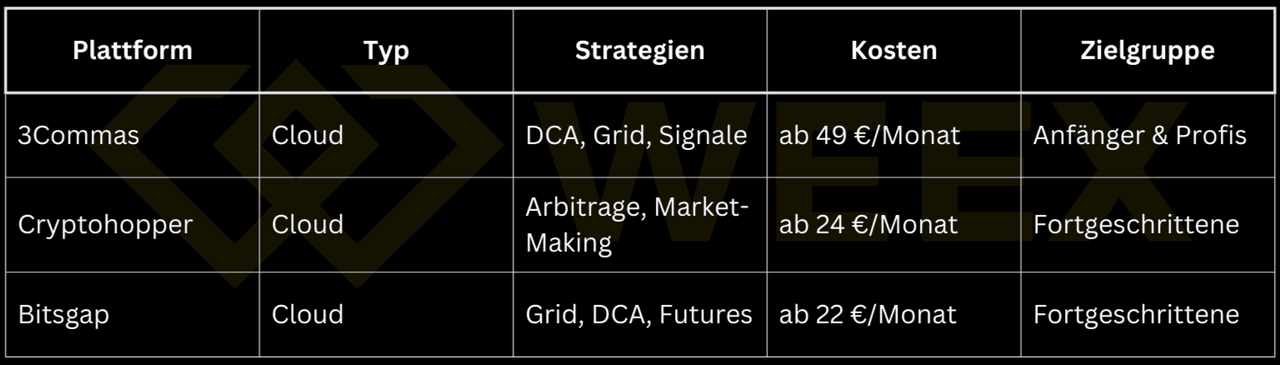
Recommendation: For beginners, using internal tools or WEEX Copy Trading is the safest and most affordable starting point.
Guide: 7 steps to your first AI trade on WEEX
- Create an account: Register on WEEX (no KYC required for basic trading).
- Connect API (optional): If you use external bots, create an API key in your profile. Read our API security documentation for this.
- Choose strategy: Decide on grid (sideways market) or DCA (long-term).
- Backtesting: Always test your strategy with historical data. Tools like TradingView or QuantInsti offer features for this.
- Risk management: Set stop-loss limits to limit losses.
- Test run: Start with a small amount of capital (e.g., 50-100 USDT).
- Optimization: Check performance weekly and adjust grid intervals.
Risk management: How to protect your capital
AI also makes mistakes. Keep these risks in mind to protect your capital:
- Overfitting: A strategy that worked 100% in backtesting can fail in the real market. Never rely solely on past data.
- Black swans: Unpredictable market events (such as pandemics or regulations) can confuse algorithms.
- Technical failures: Ensure your internet connection is stable or use cloud-based solutions.
- Liquidation risk: Especially when trading futures, you should keep leverage low to avoid total losses from flash crashes.
AI Wars: The WEEX ecosystem
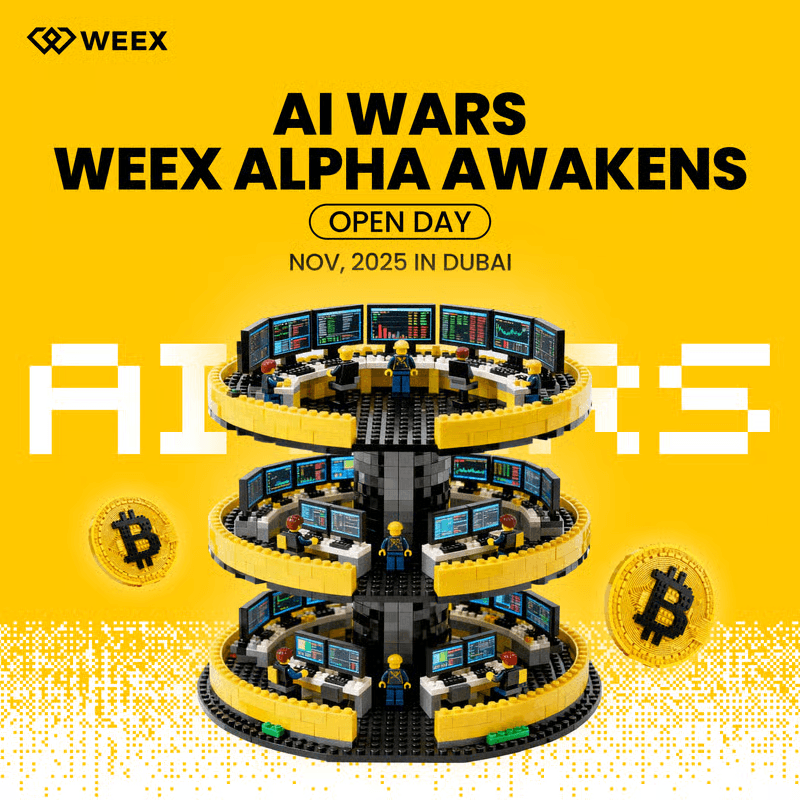
The success of the WEEX Alpha Awakens event shows how great the interest in AI-supported trading is. The insights from live demos and expert talks are continuously integrated into our platform.
In 2026, we also offer the community:
- Trading challenges with real prize pools.
- Step-by-step configurations from professionals.
- Access to the latest AI tools directly in the dashboard.
Conclusion: Is it worth getting started now?
AI trading makes the financial market faster and more precise. It is not a magic bullet for quick wealth, but a powerful tool for discipline and efficiency.
Whether you are taking your first steps with a simple DCA savings plan or running complex grid strategies: It is important that you invest in your knowledge. Check every strategy and keep an eye on your risk.
Ready for the next level? Register for free on WEEX now and test trading tools
FAQ – Frequently Asked Questions
Can I get rich quickly with AI trading?
No, realistically 5–15% returns per year are possible.
Do I need coding skills?
No, simple platforms are no-code – for advanced applications with ChatGPT, Python skills are helpful.
How much starting capital do I need?
$100 for testing, $1,000+ for sustainable returns.
Are AI bots safe?
Yes, with reputable platforms; never grant withdrawal rights.
Can the bot lose all my money?
With stop-loss and position sizing, a total loss is unlikely.
WEEX | Rising star of crypto exchanges in the DACH region
WEEX combines security, innovation, and community with features for beginners and professionals:
Security & Protection
- 1,000 BTC Protection Fund: Self-funded fund for rapid loss protection in exceptional cases
Trading & Earning
- Auto Earn: Daily automatic USDT earnings without effort
- Copy Trading: Follow elite traders automatically or apply as an elite trader for additional benefits
- WE-Launch: Early access to new projects – exclusive to WEEX users
Benefits & Rewards
- Promotions & Rewards: Trading competitions and special bonuses for active users
- Affiliate Program: Lifetime commissions through new users – details here
- VIP Benefits: Lowest fees, market insights, and personal support for high-volume traders
- WXT Token: Fee discounts, airdrops, and exclusive platform benefits
Discover current trends on WEEX Spot and start now: Register now
Disclaimer – Legal notice from the WEEX exchange
WEEX and its affiliates offer services for the exchange of digital assets, including derivatives and margin trading, only where legal and to eligible users. All content is general information, not financial advice - seek independent advice before trading. Trading cryptocurrencies is associated with high risk and can lead to a total loss. By using the services of WEEX, you accept all associated risks and terms. Never invest more than you can afford to lose. Further information can be found in our Terms of Use and in the Risk Disclosure.